Calbee to Restore Full-Color Packaging for Products in Japan
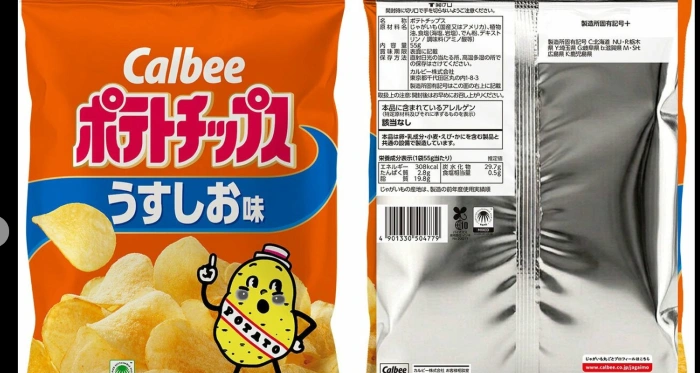
Japanese snack giant Calbee announced on July 9 that it will restore full-color packaging for its domestic products, reversing a previous shift to black-and-white designs as its supply outlook improves.
The company had temporarily switched to two-color black-and-white packaging in May due to ongoing tensions in the Middle East, which disrupted supplies of naphtha—a key raw material used in printing ink. Calbee plans to roll out the restored full-color packaging starting the week of July 27, while continuing to save resources and monitor its supply chain closely.
This recovery reflects a broader stabilization in Japan's energy supply line. The Japan Shipowners' Association reported on July 7 that the number of Japanese-flagged or operated vessels stranded in the Persian Gulf dropped from 45 at the start of the conflict to 26. Recently, several ships—including six Very Large Crude Carriers (VLCCs) carrying 12 million barrels of Middle Eastern crude oil—successfully departed the Strait of Hormuz bound for Japan. Commodity analytics firm Kpler also noted that additional tankers loaded with Saudi oil have headed to Japan after Saudi Arabia resumed loading at its primary Gulf port in late June.
Data from tanker-tracking service Vortexa shows that Japan's naphtha imports in May recovered to over 90% of last year's level, with crude oil imports expected to return to around 80%. Former Middle Eastern supply gaps have been effectively bridged: Japan managed to secure enough oil through alternative imports and strategic reserve releases to fully cover its standard monthly consumption needs, helping stabilize national energy supplies.
To bypass the shipping bottlenecks in the Persian Gulf, Japan diversified its oil sources by importing from the United States, Azerbaijan, South Sudan, and Sakhalin Island. Japanese buyers have also explored purchasing Iranian crude under temporary U.S.-Iran agreements, provided sanctions relief and transportation terms allow. Additionally, as part of a global release coordinated by the International Energy Agency, Japan tapped into its state petroleum reserves, releasing 80 million barrels of crude and oil products to keep domestic industries and manufacturing running smoothly.



Contact Us





Copyright © 2023 apppexpo.com 保留所有权利 沪ICP备12019481号-1 |  沪公网安备31010102008440号