A Decade of Change: Inkjet Technology Leads the Global Digital Textile Printing Market
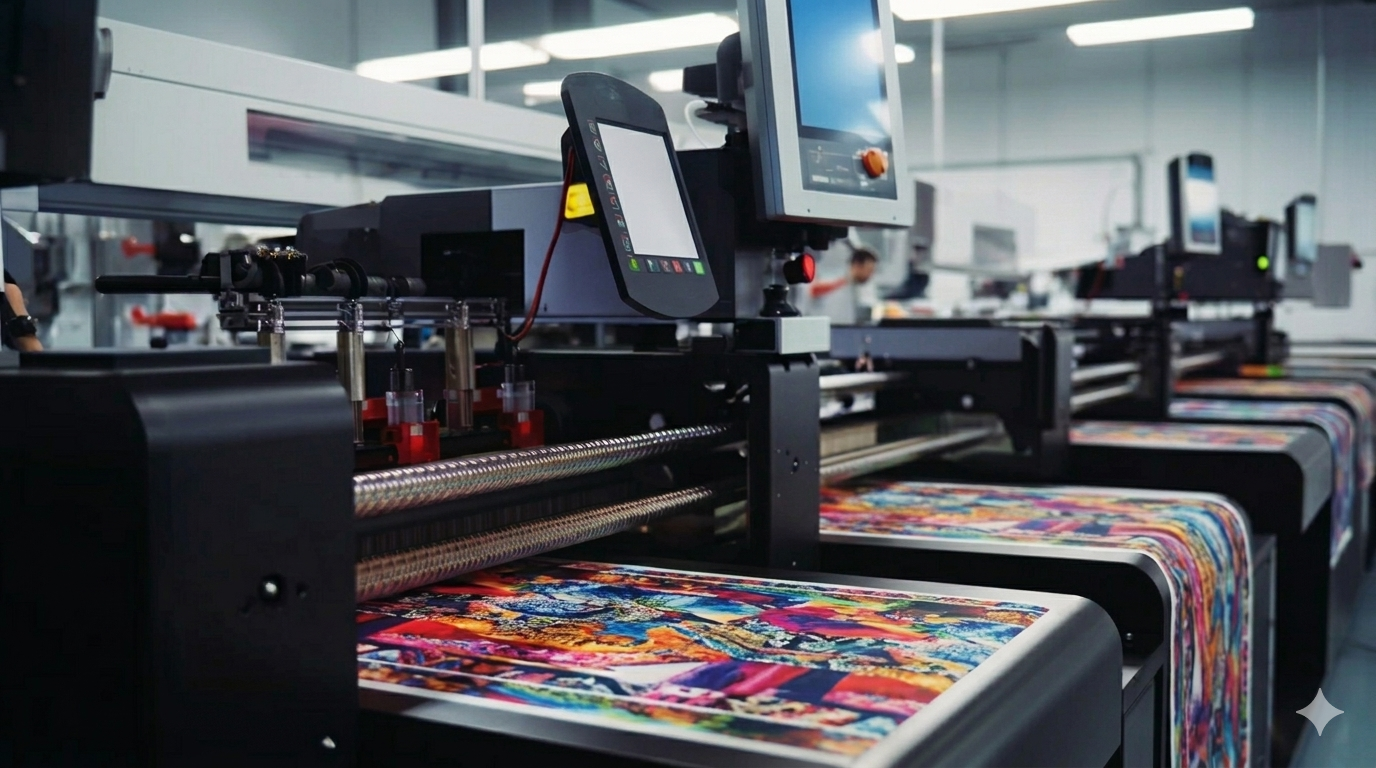
As consumers look for personalized products and environmental rules become stricter, the global digital textile printing market is entering a ten-year period of big changes. Reports show the market is expected to reach $4.3 billion by 2026. Inkjet technology is the main driver, holding a 72% market share, while the rise of pigment inks is speeding up industry upgrades.
The growth of digital printing comes from a mix of new technology and market demand. Traditional printing is slow, expensive for small orders, and requires complex plate-making. In contrast, inkjet printing needs no plates, offers high resolution (up to 1440dpi), and is very flexible. It works perfectly on cotton, linen, and polyester, meeting the "small order, fast response" needs of fashion brands like Zara and SHEIN, as well as the custom trends driven by e-commerce live streaming.
The type of ink used determines efficiency and environmental impact. Pigment ink is becoming a new growth engine, with an expected annual growth rate of over 7.7%. Unlike traditional inks, pigment ink does not need complex pre-treatment or washing after printing. This shortens production time, reduces water use by over 50%, and cuts waste ink by 70%. Thanks to nanotechnology, pigment inks now offer colors and durability nearly as good as traditional dyes while working on almost any fabric.
Globally, the digital textile printing market is growing steadily. It is expected to jump from $3.8 billion in 2025 to $12.3 billion by 2035. New technologies like "Single-Pass" have made digital printing fast enough for mass production, bringing costs close to traditional methods. This moves digital printing from a "high-end luxury" to a "mass-market" solution.
In terms of regions:
Europe: The leader in innovation, with over 50% of its printing already digital.
Asia-Pacific: The fastest-growing region. China’s digital printing output is expected to exceed 7 billion meters by 2030.
North America: Maintaining steady growth due to high demand for custom products and strong e-commerce.
This change is driven by three factors: consumers want personalized and green products; production is becoming cheaper as Chinese companies improve equipment and ink; and governments are pushing for "green manufacturing" to replace high-pollution traditional dyeing.
Looking ahead to 2026–2036, the potential for digital printing will grow even further. Inkjet technology will become faster and more precise. Pigment inks will continue to grow due to their eco-friendly benefits. Additionally, AI-optimized designs and the expansion of high-end custom markets will provide new energy for growth.
For those in the industry, the key to success is focusing on technology and environment. Digital printing is no longer just a "backup" method—it is becoming the mainstream choice, starting a new era of efficient and creative textile production.



Contact Us





Copyright © 2023 apppexpo.com 保留所有权利 沪ICP备12019481号-1 |  沪公网安备31010102008440号