Powder-Free DTF Technology Enters the Americas
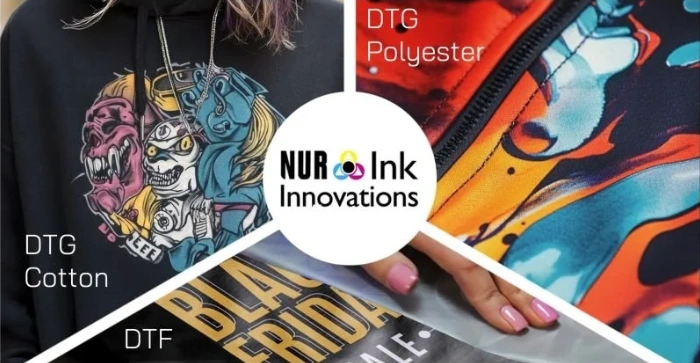
Nur Ink Innovations has signed a partnership agreement with DCC Group, which will handle the distribution of its new powder-free DTF ink across the Americas. Under this agreement, DCC Group becomes the exclusive distributor of Nur Ink’s DTF and new powder-free DTF inks in the region.
The partnership was discussed and finalized during the PRINTING United show in Orlando, Florida. It combines Nur Ink’s advanced ink systems with DCC’s NeoFlex F-series printers. According to the multi-year agreement, DCC Group will supply hundreds of tons of ink. Nur Ink says this cooperation shows strong confidence in its technology and long-term market potential.
Moshe Nur, Chairman and CEO of Nur Ink Innovations, said this is a major step for both Nur Ink and the DTF printing industry. He noted that DCC is a leader in digital textile printing and shares Nur Ink’s vision for the next stage of digital printing. The two companies aim to create a seamless solution that improves color accuracy, durability, production efficiency, and large-scale commercial performance.
Nur Ink has long focused on improving print performance while reducing environmental impact. Recently, its R&D has focused on challenges in the fast-growing DTF market, especially environmental issues.
Data from WTiN shows that global DTF printing is expected to use about 426 million square meters of PET film this year, with very little recycled material. At the same time, the use of adhesive powder is expected to grow by 16%, reaching more than 27,000 tons.
Although adhesive powder is important to the DTF market, it brings several problems. Most powders are not biodegradable and can release VOCs during curing. Powder waste also makes it harder to meet environmental rules, and some critics say regulations have not kept up with the fast growth of garment printing.
Pressure from brands and consumers for more sustainable solutions is pushing the apparel decoration market to change. This has led Nur Ink to develop a powder-free process to reduce waste and pollution.
Quality and cost are still key factors when investing in powder-free technology. One common issue with powder is the heavy, stiff feel it can create, giving prints a rubber-like texture. This can lower product value and limit where print service providers can use DTF.
Ink systems that use liquid binders can solve many of these problems. Uneven powder coating can cause weak adhesion, poor wash fastness, or blurry edges. The printing environment can also affect how evenly powder sticks to film, and extra powder must be cleaned off, which slows production. In addition, powder curing requires very strict settings, increasing the risk of operator errors. These issues can reduce durability or cause defects like yellowing or uneven gloss. Early DTF users often faced high equipment failure rates due to lack of experience.
Nur Ink’s powder-free process, launched in September 2025, is expected to simplify operations and increase confidence in the future of DTF technology.
Dhaval Dadia, CEO of DCC Group USA, will lead the cooperation for DCC. Both companies say the partnership reflects a shared goal of combining innovation with real-world use, helping digital printing become more efficient and more environmentally friendly.



Contact Us





Copyright © 2023 apppexpo.com 保留所有权利 沪ICP备12019481号-1 |  沪公网安备31010102008440号